God is in control. You've probably heard the phrase. Maybe you even use it yourself. In a world that feels out of control, or more particularly, when your world seems out of control, those words can feel reassuring. Comforting. Never mind, it's OK. God is in control.
But what does that actually mean?
Without nuance, there's a risk that this phrase can dismiss some of the suffering, evil and injustice we find that life can throw our way. At worst it can represent what I call a "Qué Será, Será" theology. Whatever will be will be. God is in control. Nothing you can do. Nothing you need to do. You're just a passenger on this wild ride. But it's OK, cos "Jesus has the wheel". Humanity has nothing to do except sit in the back seat and try to enjoy the view.
This way of thinking can have a very real cost. If God's already decided exactly what He is going to do, why intercede in prayer at all? Why bother sharing the gospel — He'll save who he wants to regardless of what we do. Why seek healing? Why resist injustice?
You won't find the phrase "God is in control" in the Bible. The closest you'll probably find is Proverbs 19:21: "Many are the plans in a person's heart, but it is the Lord's purpose that prevails" or Colossians 1:17: "He is before all things, and in him all things hold together." But there is subtlety and nuance there that "God is in control" loses. The Lord's purpose prevailing is less rigid to my ears. The ultimate goal will be achieved, but the methods might flex. The destination is set — but the exact route may need to change as the journey progresses. There might be detours, or even short cuts. Control in contemporary English often carries a much stronger implication — especially in the context of relationships, it's often about limiting other people's freedom, ensuring total compliance, and aiming to get exactly what it wants.
That doesn't seem to be how God's will works.
"Your will be done"
When Jesus teaches his disciples how to pray he says they should say: "Your kingdom come, your will be done, on earth as it is in heaven" (Matt 6:10). In the Greek, both "come" and "be done" are imperatives: let your kingdom come; let your will come to pass. This is not a statement that everything happening on earth already reflects God's will. Quite the reverse. It acknowledges the disconnect: right now God's will is not being done on earth as it is in heaven. That's exactly why we need to pray these words.
There are multiple places in scripture that God makes clear what his will is, what he wants to happen:
- 1 Timothy 2:3–4 — "God our Saviour... desires all people to be saved..."
- 2 Peter 3:9 — "...not wishing that any should perish, but that all should reach repentance."
- 1 Thessalonians 4:3 — "For this is the will of God, your sanctification..."
Now, if we stop and ask ourselves: is God getting these things right now? The answer is, if we are honest, no. Will he get all the things the Bible says he wants? Most of us probably have a theology that says: no. Not everyone will be saved. Not everyone will repent. That's hard to hear, but it's what scripture teaches.
So God is not going to get everything he wants. Why is that? One verse spells it out plainly: Matthew 23:37 — "How often would I have gathered your children together... and you were not willing."
The answer is right there
What stops God getting what he wants? What prevents his will being done?
The answer is not hidden. "You were not willing." God gives us the choice. Obey or disobey. Follow or turn away. Repent or stay on our own path. He allows people the freedom to choose — even when that means he doesn't get what he would want.
Human resistance does not mean God is powerless or that his purposes collapse. Isaiah gives us a striking example of how God can work through human choices without approving everything people choose. God uses the Assyrians — but they go further than his purposes. And in verse 12, the prophet says God will punish the king of Assyria "for the willful pride of his heart." Willful pride that will be punished — which means God is not judging someone for doing what he wanted them to do. This is the nuance: God has a plan, yes. But human beings have free will and agency. We can find ourselves on the line — part of this is in God's plan, part of this is not.
And that affects the details of our lives too. It's not just in the big things — judgement of nations, salvation and redemption — that human will can miss God's will. It's also in the smaller, everyday choices. The choices we make, and the choices others make. This is the reality of sin and a fallen world. This is not what God wanted. It's not what he would choose. It's what we choose.
Where it begins
Praying "your will be done" doesn't start in the world out there — it begins in you and me. Lord, let your will be done in me. Let your kingdom come in me. Your will, not mine. That's freedom. That's love. And ultimately what God wants most of all is for his children to love him. But love that is compelled is not love at all.
So, do I believe "God is in control"? If you mean that God is sovereign and that ultimately his plan and purpose for humanity and all creation will be fulfilled through the return of Jesus Christ — yes, I do. If you mean that he is micromanaging every single thought you have, word you speak and move you make — no, I don't. And I don't think scripture supports that idea. God didn't make us robots. He gave us real choice. Even though that means he doesn't get everything he wants.
But the question we can ask is this: will God get what he wants from me?
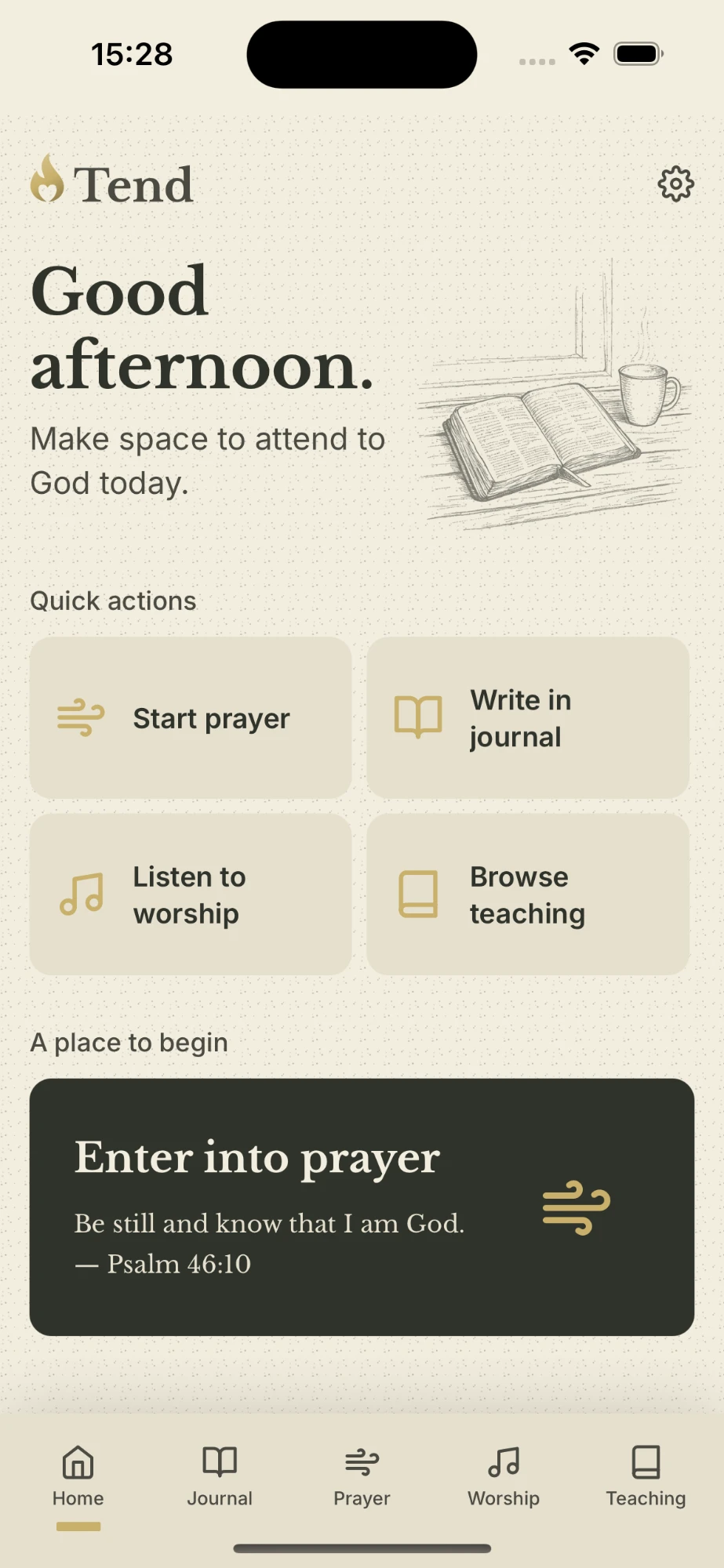
Following Jesus is about learning to recognise what God wants from us — and freely responding in obedience. That's exactly why we created Tend.